Best meal-prep containers
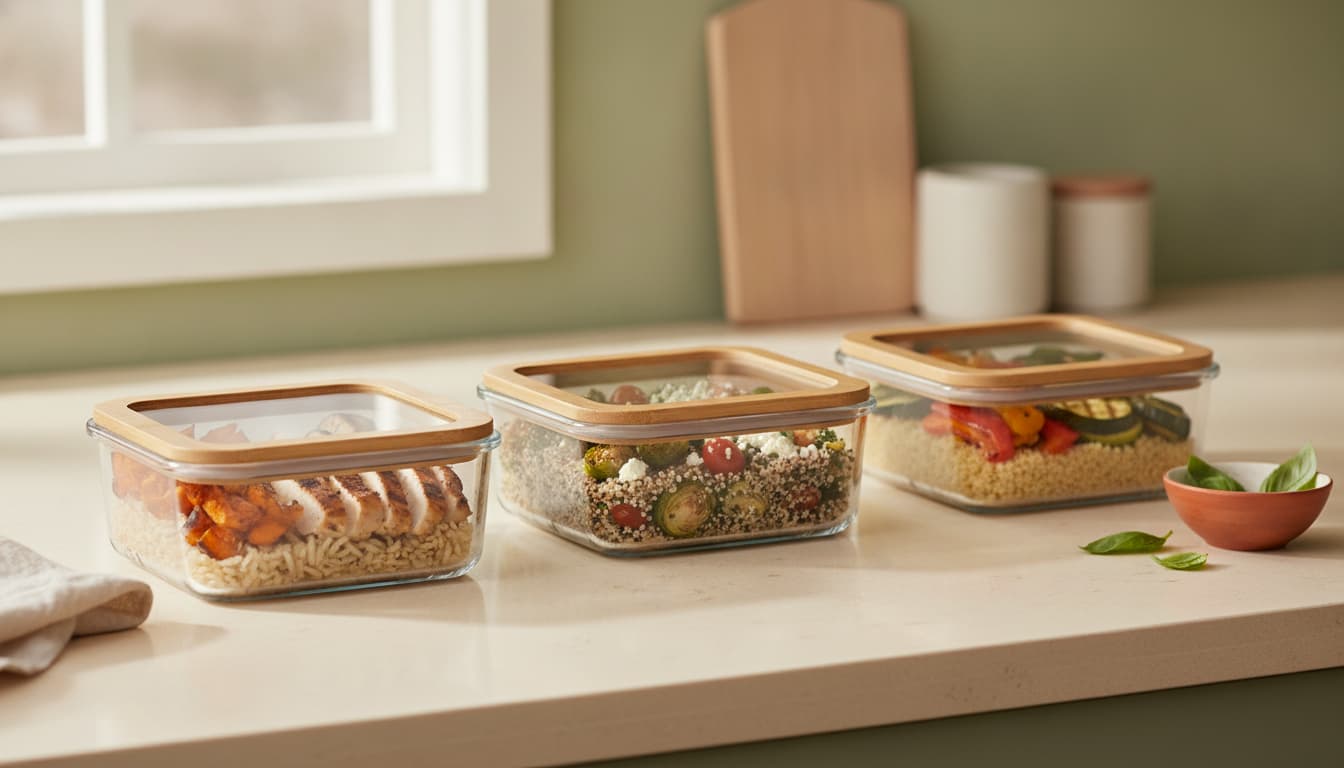
By The ThatCleanChef Kitchen · Updated June 18, 2026 · 8 min read
The glass meal-prep containers we actually reach for: leakproof, freezer-to-oven, no stains or microplastics. Honest picks, weight and cost included.
- 01
Pyrex glass meal-prep set
The set we hand to anyone starting out. Tempered glass that goes fridge to oven to dishwasher without flinching, does not hold curry stains or garlic smell, and the bases stack flat. Lids are the weak point: they are plastic, not leakproof for soup, and the vent flaps wear out before the glass does. Heavy in a tote, but for everything you reheat at home this is the honest default.
SponsoredCheck price · Amazon - 02
Glasslock oven-safe set
If you carry lunch and hate leaks, this is the upgrade. Four locking tabs and a silicone gasket actually hold liquid sideways in a bag, and the glass is oven-safe once you pull the lid. Borosilicate shrugs off the fridge-to-oven jump. The tradeoff is fiddle: four clips per container adds up across a week, and the gaskets need a real wash so they do not get funky. Worth it for brothy or saucy preps.
SponsoredCheck price · Amazon - 03
Souper Cubes freezer trays
Not a lunch box, a portioning tool, and the one we use most. Silicone trays freeze stock, soup, sauce, and cooked grains into clean one-cup bricks you pop out and bag. Lids seal for stacking in the freezer. They are not for carrying or oven reheating, so think of them as the front half of meal prep: batch, freeze, portion, then thaw into a real dish.
SponsoredCheck price · Direct - 04
Ello Duraglass
The most commute-friendly glass here. A silicone sleeve guards the base against chips and your hands against heat, and the lids snap on with a decent seal for non-soupy food. Glass is thinner than Pyrex, so treat the rim gently. A good pick if you have dropped a bare glass container before and want some insurance without going full plastic.
SponsoredCheck price · Amazon - 05
Prep Naturals glass containers
The budget glass play when you need volume. You get a stack of compartment trays cheap, useful for portioning protein and two sides without flavors bleeding. Glass quality and lid fit run less consistent than the top picks, and the dividers are low so saucy items still migrate. Fine as starter quantity, just expect to replace a lid or two over a year.
SponsoredCheck price · Amazon - 06
Thin plastic bargain container set (we would skip)
We would skip these. The cheap multipack feels like a deal until tomato sauce stains them orange in one use, garlic and onion smell never fully washes out, and reheating oily food in thin plastic is exactly the microplastic exposure we avoid. They warp in the dishwasher and crack by month two. Glass costs more up front and lasts years, which makes the plastic the more expensive choice.
SponsoredCheck price · Amazon
Where the technique comes from
About the ThatCleanChef Kitchen
A small team of recipe developers and food photographers testing recipes in home kitchens on home equipment. Every Nutrition Ledger is USDA FoodData Central-sourced and reviewed by Lena Marsh, RDN, MS. We don't pretend to be a single chef, we're the people behind the plates. Meet the full team →
Related posts
How to Cook Steak: Salt It Early, Dry It Properly, Use a Thermometer
There are only four variables in a steak and none of them is the pan. Thickness decides the method, surface moisture decides whether it browns or steams, internal temperature decides doneness, and the rest decides how much of the juice ends up on the board instead of in the meat. Salt forty-five minutes ahead, cook to a number rather than to a timer, and stop cutting into it to check.
Scrambled Eggs: Low Heat, Constant Motion, Off the Hob Early
Scrambled eggs are a temperature exercise with an eight-minute margin for error and almost nobody uses it. Egg protein sets between 145F and 165F, and above that it squeezes out water and turns to rubber sitting in a grey puddle. Low heat, a spatula that never stops, fat that goes in cold, salt at the start, and the pan off the burner while they still look underdone.
Mashed Potatoes: Cold Water Start, Warm Dairy, and Never a Blender
Gluey mash is not a seasoning problem, it is a mechanical one. Potato starch granules burst when you agitate them, and once they have burst nothing brings the texture back. Start the potatoes in cold salted water so they cook evenly, dry them over the burner, push them through a ricer rather than beating them, and add butter before dairy. Forty-five minutes including the pot you have to wash.
The Clean Chef Starter Kit.
A 14-day anti-inflammatory meal plan PDF, grocery list by section, macros totaled per day, Sunday prep sequence. Free.
By subscribing, you agree to our Privacy Policy. One calm email a week. Unsubscribe anytime.