Sheet-pan dinners
By The ThatCleanChef Kitchen · Updated June 30, 2026 · 10 min read
A sheet-pan dinner is the lowest-effort hot meal there is, a protein, vegetables, and a smart seasoning on one tray, the oven doing all the work, one thing to wash. Here are the chef-tested sheet-pan dinners on this site plus the formula to build your own, each with the real protein number. Part of the easy healthy dinner recipes collection; start with the sheet-pan mediterranean chicken.
- 01
Sheet-pan Mediterranean chicken, 38g protein
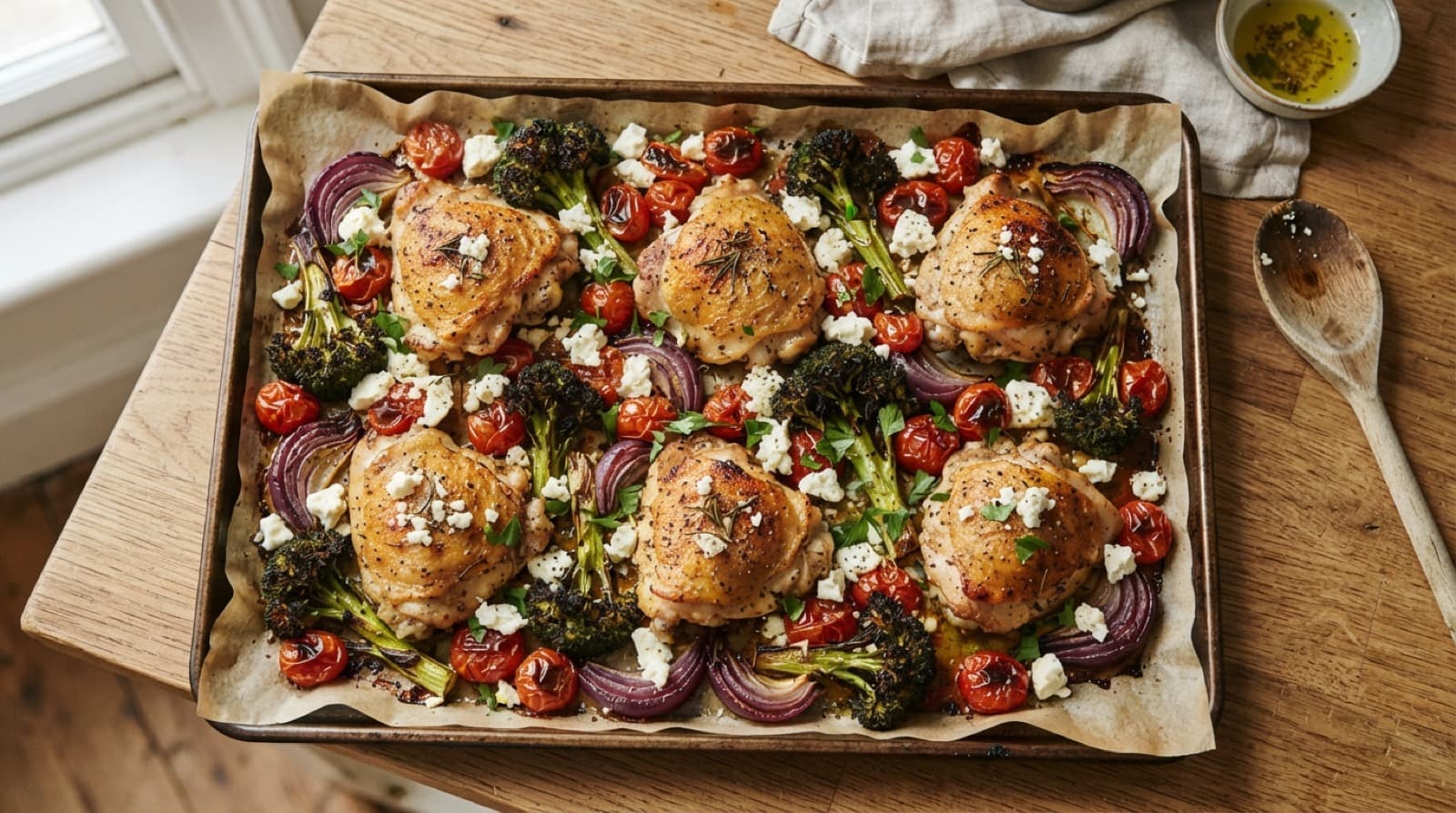
Chicken thighs roasted with cherry tomatoes, olives, red onion, and feta crumbled on at the end, the whole Mediterranean plate on one tray in 35-40 minutes. This is the one to start with and the deepest sheet-pan page in the collection. The move that matters: pat the thighs dry and start them skin-side up on the upper rack so the fat renders and the skin crisps. See the sheet-pan mediterranean chicken for the layout.
- 02
Paleo sheet-pan chicken and vegetables, 36g
Chicken, sweet potato, broccoli, and red onion tossed in olive oil and a simple spice rub, the grain-free, dairy-free version of the format. Cut the sweet potato small (3/4-inch) so it finishes with the chicken instead of staying raw. 40 minutes, one tray, leftovers reheat well. The paleo sheet-pan chicken and vegetables recipe has the cut sizes and timing.
- 03
Sheet-pan ginger-turmeric salmon, 38g
Salmon fillets and a tray of vegetables under a ginger-turmeric-garlic glaze, twenty minutes total because fish cooks fast. Roast the vegetables for ten minutes first, then add the salmon, they cook at different speeds, so they go in at different times. The ginger-turmeric salmon recipe scales straight to a sheet pan; pull the salmon at 125-130F for medium.
- 04
The build-your-own formula: protein + dense veg + quick veg
Any sheet-pan dinner is three slots: a protein anchor, a dense vegetable that needs the full roast (sweet potato, squash, cauliflower), and a quick vegetable added partway (broccoli, zucchini, peppers, cherry tomatoes). Stagger them by roast time and everything finishes together. 425F is the default; toss everything in enough olive oil and salt, don't crowd the pan.
- 05
Don't crowd the pan, and use two if you must
The single most common sheet-pan mistake: piling everything on one tray so it steams instead of roasting. Food needs space and contact with hot metal to brown. If it doesn't fit in a single layer, use two pans and rotate them top-to-bottom halfway through. Crowded vegetables go soggy and gray; spaced ones char at the edges.
- 06
Line it, and finish with acid
Parchment or foil turns cleanup into throwing away a sheet, the whole point of the format. And every sheet-pan dinner wakes up with acid added at the end off the heat: a squeeze of lemon, a splash of red wine vinegar, or a spoon of the pan juices with herbs. Roasting concentrates sweetness; the acid balances it. This is the difference between flat and finished.
Where the technique comes from
About the ThatCleanChef Kitchen
A small team of recipe developers and food photographers testing recipes in home kitchens on home equipment. Every Nutrition Ledger is USDA FoodData Central-sourced and reviewed by Lena Marsh, RDN, MS. We don't pretend to be a single chef, we're the people behind the plates. Meet the full team →
Related posts
Fried Rice: Cold Rice, Hot Pan, and Soy Down the Side
Fried rice is a moisture-management problem wearing a stir-fry costume. Freshly cooked rice is saturated and its starch is still gelatinised, so it clumps and steams. Rice that has spent a night uncovered in the fridge has lost surface water and retrograded, and it separates into individual grains in a hot pan. Twenty-five minutes of cooking, and one decision made the day before.
Apple Crisp: Two Varieties, Cold Butter, Forty-Five Minutes
A watery apple crisp is not a topping problem. It is an apple problem and a time problem. One variety of apple gives you either mush or raw wedges, and thirty minutes is long enough to brown a topping but not long enough to cook fruit through and drive off its water. Two varieties, a spoon of cornstarch, coarse oat topping made with cold butter, and forty-five minutes at 375F. Seventy-five minutes total, and it wants twenty of them to rest.
Coleslaw: Salt the Cabbage, Squeeze It, Then Dress It
Coleslaw goes watery for one reason. Cabbage is ninety-two percent water, and if you dress it raw, the salt in the dressing pulls that water out over the next hour and dilutes everything you just made. Salt the shredded cabbage first, let it drain for thirty minutes, squeeze it, and then dress it. Fifty minutes including the wait, and the difference is a slaw that is still crunchy on day three.
The Clean Chef Starter Kit.
A 14-day anti-inflammatory meal plan PDF, grocery list by section, macros totaled per day, Sunday prep sequence. Free.
By subscribing, you agree to our Privacy Policy. One calm email a week. Unsubscribe anytime.