- Calories
- 340
- Protein
- 36g
- Fiber
- 1g
- Sat. fat
- 3g
- Sodium
- 620mg
- Added sugar
- 6g
What this recipe does for you.
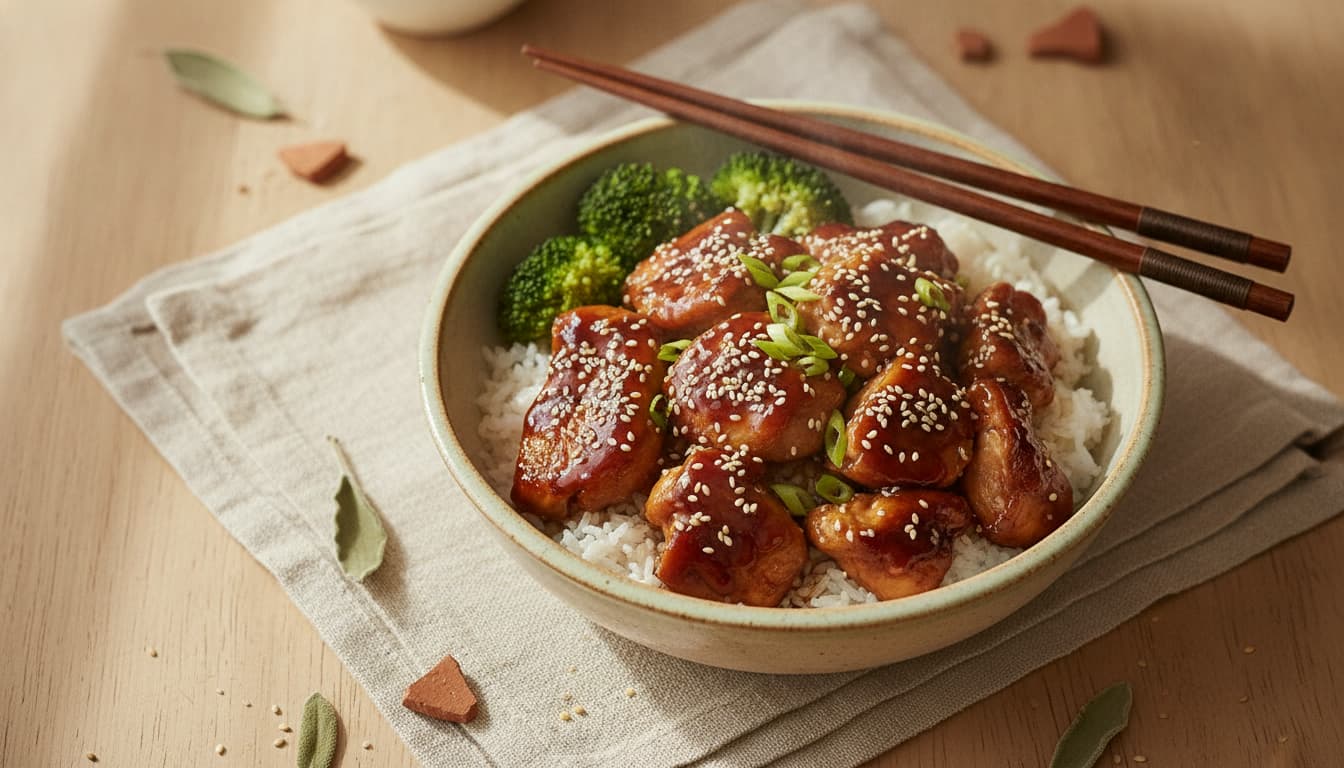
Teriyaki chicken with a glossy, clingy glaze that tastes of more than sugar: soy, mirin, fresh ginger and garlic reduced with just a spoon of honey instead of half a cup of sugar. 36g protein per serving.
Why this works
Every recipe on this site ships with an explanation of the technique decisions, why sear then braise, why the acid goes in at the end, why the fat renders before the aromatics. The method below is those decisions, in order.
Ingredients
Serves 4- 1.5 lbboneless skinless chicken thighs · cut into bite-size pieces
- 1 tbspavocado oil
- 1/3 cuplow-sodium soy sauce · or tamari for gluten-free
- 3 tbspmirin
- 1 tbsphoney
- 1 tbsprice vinegar
- 2 clovesgarlic · grated
- 1 tbspfresh ginger · grated
- 1 tspcornstarch · slurried in 1 tbsp water
- 1spring onion · sliced, to finish
- 1 tsptoasted sesame seeds · to finish
Method
Skip the bottled sauce, it is mostly sugar
Supermarket teriyaki is corn syrup with a whisper of soy. Real teriyaki is soy, mirin and a little sweetener reduced to a glaze. Making it takes five minutes and lets you use one spoon of honey where the bottle uses six of sugar, so the sauce tastes savoury and deep, not cloying.
Reduce the sauce separately first
Simmer the soy, mirin, honey, vinegar, garlic and ginger in a small pan until it coats a spoon, about four minutes. Reducing it away from the chicken means you control the thickness and never scorch the sugars against hot meat. A cornstarch slurry at the end gives it the gloss.
Sear the chicken dry before it meets the sauce
Pat the thigh pieces dry and sear them hard in a hot pan until browned on two sides. Browning is flavour, and a wet glaze poured over pale chicken just steams it. Get the colour first, glaze second.
Glaze at the very end, off high heat
Pour the reduced sauce over the seared chicken and toss for thirty to sixty seconds until every piece is lacquered. Any longer over high heat and the honey burns bitter. The residual heat is enough to cling the glaze on.
Grate the aromatics, do not chop
Grated garlic and ginger dissolve into the sauce and flavour every bite. Chopped pieces sit as chewy nuggets and can catch and burn in the reduction. A microplane is the right tool here.
Finish with sesame and spring onion
A scatter of toasted sesame seeds and sliced spring onion greens adds nuttiness and a fresh bite that cuts the richness. Add them off the heat so the onion stays bright rather than wilting into the sauce.
Variations
Substitutions and adaptations land with the photography shoot. The method holds across most reasonable swaps.
Storage
Refrigerator: 3 to 4 days, sealed. Freezer: up to 3 months. Reheat covered to retain moisture.
Frequently asked
- How is this lower in sugar than takeaway teriyaki?
- Restaurant and bottled teriyaki often carry twenty grams of sugar or more per serving from added corn syrup. This version uses one tablespoon of honey across four servings, so it lands around six grams of added sugar per plate while still reducing to a proper glossy glaze.
- Can I make it gluten-free?
- Yes. Swap the soy sauce for tamari and check your mirin, as some brands are fine but read the label. Everything else in the sauce is naturally gluten-free. Serve over rice or cauliflower rice as you like.
- Breast or thigh?
- Thigh stays juicy under the glaze and forgives a slightly long sear. Breast works if you cut it into even pieces and pull it as soon as it is cooked through, but it is less forgiving. Either way, dry the meat before searing.
- What should I serve it with?
- Steamed rice or brown rice soaks up the glaze, and a fast side of steamed broccoli or a smashed cucumber salad balances the sweetness. For a lower-carb plate, cauliflower rice and stir-fried greens work well.
Related recipes
See all →- High-Protein
Beef Bourguignon: Dry the Meat, Crowd Nothing, Wait a Day
This is a braise that fails at the first step or not at all. Wet beef in a crowded pot steams, and a stew built on steamed beef cannot be rescued later by wine, stock or time. Dry the cubes, brown them in three batches, cook the garnish separately, and give it three hours at 325F. Then, ideally, put it in the fridge overnight, because the second day is a different dish.
240m42g Protein - High-Protein
How to Cook Tofu: Press It, Coat It in Starch, Sauce It Last
Tofu is bland and soggy for two mechanical reasons, and both are fixable. It is packed in water, so the surface cannot brown until that water is gone, and it is a set protein gel with no internal channels, so marinade does not penetrate it no matter how long you wait. Press it, coat it in cornstarch, fry it hard, and sauce it after it is crisp. An hour, most of it pressing.
60m20g Protein - High-Protein
Enchiladas: Fry the Tortillas, Fry the Sauce, Bake Them Briefly
Nearly every bad enchilada is the same enchilada: a raw corn tortilla soaked in canned sauce and baked until the whole tray turns to porridge. Two steps fix it permanently. Pass each tortilla through hot oil for twenty seconds so it waterproofs, and fry the blended chile sauce in fat before it goes anywhere near the pan. Ninety minutes, most of it the sauce, and twenty of it in the oven.
95m34g Protein
Get a tested recipe + a nutritional note in your inbox each Sunday.
One recipe a week, photographed on the same Tuesday it tested. Reviewed by an RD. No promotions, no pop-ups, no tracking.
The Clean Chef Starter Kit.
A 14-day anti-inflammatory meal plan PDF, grocery list by section, macros totaled per day, Sunday prep sequence. Free.
By subscribing, you agree to our Privacy Policy. One calm email a week. Unsubscribe anytime.
We're building a shop.
Curated cookware, pantry staples we actually buy, recipe-bundle PDFs. Be the first to know when it opens.
We'll only email you about the shop opening. Unsubscribe in any email. See our Privacy Policy.