Whole30 food list
By The ThatCleanChef Kitchen · Updated June 28, 2026 · 9 min read
Exactly what you can and can't eat on Whole30, sorted so you can shop without reading every label, plus the sneaky off-program ingredients that catch everyone. Use it alongside the Whole30 recipes pillar before your 30 days begin.
- 01
In: all meat, seafood, and eggs
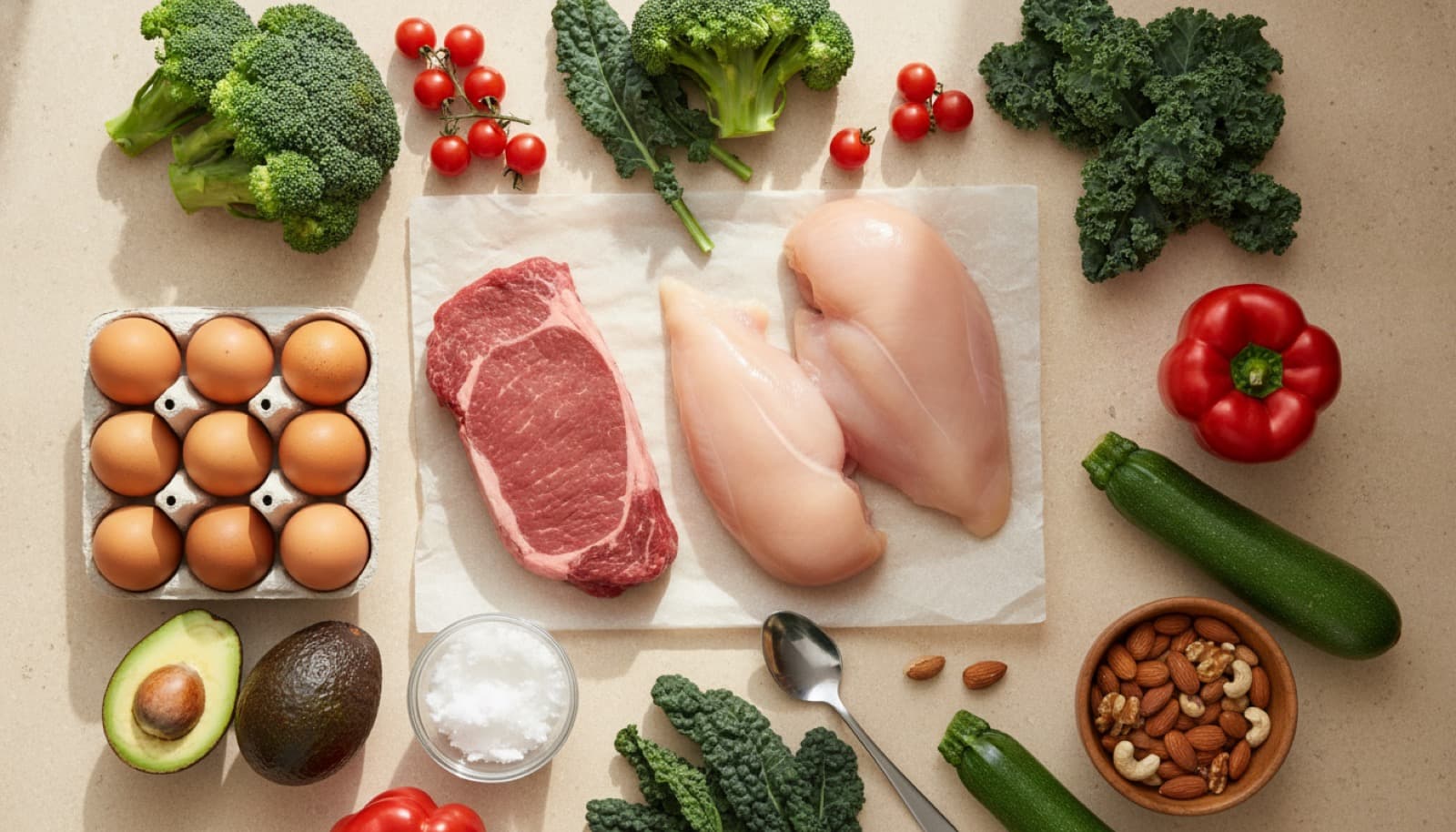
Beef, pork, chicken, turkey, lamb, all fish and shellfish, and eggs. Check labels on sausage, bacon, and deli meat, sugar and additives sneak in. Look for compliant brands (Applegate No Sugar bacon, Whole30-approved sausages). This is the protein base of the breakfast hash and the chili.
- 02
In: all vegetables, including white potatoes
Every vegetable is in, and yes, white potatoes too (they were un-banned in 2014). Sweet potato, squash, peppers, greens, cauliflower, zucchini. Roast a sheet pan at the start of the week. Green beans, snow peas, and sugar snaps are in despite being technically legumes, the edible-pod exception.
- 03
In: fruit, nuts (not peanuts), and natural fats
Fruit in moderation, all tree nuts and seeds except peanuts, and natural fats, olive oil, avocado and avocado oil, coconut, ghee, clarified butter. These fats are how you cook everything for 30 days. Almond butter is in; peanut butter is out.
- 04
Out: all added sugar, real and artificial
No cane sugar, honey, maple syrup, agave, coconut sugar, stevia, Splenda, monk fruit, nothing sweetening-related. This is the rule that catches people, because added sugar is in ketchup, bacon, almost every sauce, and most packaged foods. Read every label.
- 05
Out: grains and dairy
No wheat, rice, corn, oats, quinoa, or any grain or pseudo-grain. No cow, goat, or sheep dairy, milk, cheese, yogurt, butter (ghee is the exception). This is why breakfast is the hard meal, no cereal, toast, or yogurt. Build it around eggs and vegetables instead.
- 06
Out: legumes (beans, peanuts, soy) and alcohol
No beans, lentils, chickpeas, peanuts, or soy in any form (including soy sauce, tofu, edamame). No alcohol, not even in cooking. Coconut aminos replace soy sauce. Green beans and pea pods are the only legume exception.
- 07
Out: the sneaky additives, carrageenan, MSG, sulfites
Carrageenan, MSG, and added sulfites are off-program, which rules out a lot of packaged broths, nut milks, and dried fruit. Read the full ingredient list, not just the front of the box. Compliant broths exist (some Kettle & Fire varieties), check the label.
- 08
The grey zone: what's technically allowed but discouraged
Compliant 'treats' (Paleo pancakes, Whole30 'ice cream') are technically allowed by ingredient but against the spirit, the program asks you not to recreate junk food. Fruit juice is allowed as a sweetener in recipes. Salt is in (most table salt has a trace of sugar in the anti-caking agent, and that's fine).
Where the technique comes from
About the ThatCleanChef Kitchen
A small team of recipe developers and food photographers testing recipes in home kitchens on home equipment. Every Nutrition Ledger is USDA FoodData Central-sourced and reviewed by Lena Marsh, RDN, MS. We don't pretend to be a single chef, we're the people behind the plates. Meet the full team →
Related posts
Magnesium-Rich Foods: Pumpkin Seeds Beat Spinach, and Bread Lost Most of Its
An ounce of pumpkin seeds carries about 156mg of magnesium, which is more than a cup of cooked spinach and roughly five times what a banana delivers. Around half of adults in national survey data take in less than the estimated requirement, and the largest single reason is grain refining, which strips about eighty percent of the magnesium out of wheat before it reaches a loaf.
Potassium-Rich Foods: The Banana Is Not Even in the Top Twenty
A medium banana has 422mg of potassium. A baked potato with the skin on has around 900mg, a cup of white beans about 1,000mg, and a cup of cooked spinach about 840mg. The banana became the symbol because it is portable, not because it is dense. What the number on the plate actually depends on is portion size, whether you cooked it in water, and how much sodium is sitting next to it.
Vegetarian Recipes: Protein, Browning, and Actual Dinners
Vegetarian cooking almost never fails for lack of ideas. It fails on two things: not enough protein on the plate, and not enough browning in the pan. Fix those and a meatless dinner stops reading as the version without the main thing. Where the protein comes from, the four nutrients worth attention, the techniques that make plants taste cooked-for, and a week of dinners.
The Clean Chef Starter Kit.
A 14-day anti-inflammatory meal plan PDF, grocery list by section, macros totaled per day, Sunday prep sequence. Free.
By subscribing, you agree to our Privacy Policy. One calm email a week. Unsubscribe anytime.